
- 0
- 1,166 word
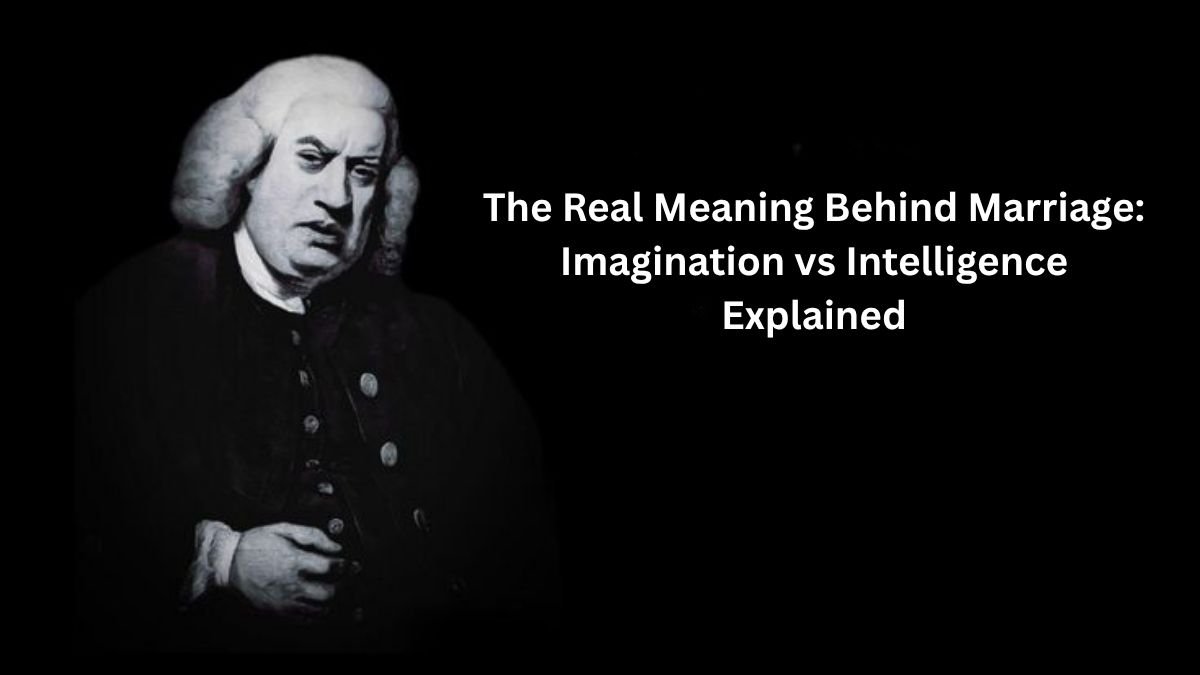
Marriage is often regarded as a beautiful dream—a bond in which love, trust, and companionship endure forever. However, when we attempt to understand it more deeply, we realize that marriage is not merely a game of emotions; rather, wisdom, experience, and a sense of reality play a pivotal role in it. The perspective on marriage offered by the renowned writer Oscar Wilde remains just as true today as it was in his time. He famously remarked that a first marriage is the triumph of imagination, while a second marriage is the triumph of hope. The underlying meaning behind this sentiment confronts us with the true reality of relationships.
The First Marriage: A World of Dreams and Fantasies
When a person enters into marriage for the first time, their mind is filled with a myriad of hopes and dreams. They view their partner through an idealized lens, imagining that everything will be perfect—that every day will be brimming with happiness and that no problems will ever arise. This mindset is not entirely incorrect, yet it does not represent the whole truth either.
In reality, during a first marriage, people tend to listen to their hearts rather than their heads. They become lost in the magic of love, a state in which they perceive only the positive aspects of the relationship. Often, they overlook their partner’s flaws or simply fail to attach any significance to them. This is precisely why, as time passes and reality inevitably sets in, challenges begin to emerge within the relationship.

Why is There a Lack of Wisdom in a First Marriage?
The primary reason for this lies in a lack of experience. The individual does not yet possess the knowledge of how to navigate relationships, how to make compromises, or how to remain resilient during difficult times. They operate under the assumption that love alone is the solution to every problem—a notion that, in real life, does not always hold true.
Here, the term “wisdom”—or intelligence—does not refer merely to formal education, but rather to emotional intelligence. When this balance is lacking, even trivial matters can escalate into major problems.
The Second Marriage: Why Hope, Even After Experience?
When an individual enters into marriage for a second time, they do so armed with prior experience. He knows what can go wrong in a relationship, what pitfalls to avoid, and how to foster better harmony. Yet, despite this knowledge, he decides to marry again.
This is where “hope” plays its part. The individual believes that this time, everything will be better; this time, he will make the right choice; and this time, the relationship will succeed. It is this very hope that motivates him to try again.

The Clash of Hope and Experience
An intriguing aspect of a second marriage is that, while the individual possesses experience, he does not rely solely upon it. Were he to act strictly on the basis of experience, he might never even take the risk of marrying again. However, it is human nature to always harbor hope for a better future.
This hope sometimes serves to strengthen him, while at other times, it becomes the very cause for repeating old mistakes. Therefore, balance is crucial here—neither excessive hope nor an exclusive reliance on experience.
The Balance of Imagination, Prudence, and Hope in Marriage
In reality, a successful marriage requires a balance of three elements: imagination, prudence, and hope. If there is only imagination, the individual risks losing touch with reality. If there is only prudence, the relationship may become overly pragmatic and devoid of emotion. And if there is only hope, the individual may face repeated disappointment.
Therefore, it is essential that we view our relationships with a sense of balance. We must accept our partner as a human being, rather than as a flawless ideal. Furthermore, while we should certainly maintain hope, we must keep it grounded in reality.
The Relevance of This Concept in Modern Times
In today’s world—where relationships are formed and dissolved with increasing speed—this concept has become even more significant. Social media and cinema have often portrayed marriage as a flawless fairytale, thereby inflating people’s expectations to unrealistic levels.
However, the truth is that every relationship demands effort. It requires understanding, patience, and time. In case we conduct ourselves within our relationships based purely on our imaginations and hopes, we shall not be ready to handle whatever the real world has for us. Conclusion: The Key to Successful Relationships is Understanding
Marriage is not a fairy tale but an experience that comes with both good times and A first marriage teaches us that imagination alone is not enough, while a second marriage helps us realize that, alongside hope, wisdom is equally essential.
If we truly grasp these two fundamental truths, we can significantly improve our relationships. Ultimately, a successful marriage is one in which love coexists with understanding, respect, and a sense of reality.
FAQS
Q1. What does imagination mean in marriage?
A. It refers to idealistic expectations and romantic dreams people have before marriage.
Q2. Why is intelligence important in marriage?
A. It helps in making practical decisions and handling relationship challenges.
Q3. Can imagination harm a relationship?
A. Yes, unrealistic expectations can lead to disappointment over time.
Q4. How can couples balance imagination and intelligence?
A. By combining emotional connection with practical understanding.
Q5. What is the key takeaway from this concept?
A. A successful marriage needs both love-driven imagination and thoughtful intelligence.
- emotional intelligence in marriage
- human behavior in relationships
- imagination vs intelligence
- love and logic
- love vs reality
- marriage expectations
- marriage meaning
- marriage psychology
- marriage truth
- modern relationships
- reality of marriage
- relationship advice
- relationship growth
- relationship insights
- understanding marriage
Author

priyachauhan007891@gmail.com
Related Posts

Hidden Pain of Venezuelan Migrants: The Psychological Crisis You Didn’t Know
- 0
- 997 words
Hidden Pain of Venezuelan Migrants: The continuous exodus of millions of people from Venezuela is not merely a story of physical displacement;...
Psychology tells us that adults who DON’T have close friends aren’t necessarily introverted or cold; many simply learned long ago that letting others get too close was the quickest way to get hurt
- 0
- 1,228 word
Psychology tells us that adults who DON’T have close friends aren’t necessarily introverted or cold: In today’s world, it is common for...
Psychology Explains Why 1960s and 1970s Kids Became Emotionally Strong Through Independence
- 0
- 1,266 word
The childhood experience of those who grew up in the 1960s and 1970s often looks dramatically different from what children experience today....

Psychology suggests that the kindest people don’t always end up surrounded by close friends; they have often learned to be helpful, understanding, and available in ways that make others feel cared for, but not necessarily understood by them
- 0
- 972 words
Kindness is often seen as a bridge that connects people, a quality that naturally attracts warmth, appreciation, and companionship. We tend to...
Exploring Behavioral Psychology: The Science Behind Human Actions
- 0
- 885 words
Behavioral Psychology is the science that seeks to understand the underlying causes behind human behavior. It is not limited merely to thoughts...

Powerful Behavioral Psychology Insights for Everyday Life
- 0
- 1,409 word
Human behavior often feels unpredictable, yet much of what we do follows patterns shaped by our thoughts, environment, and past experiences. Behavioral...
- applied behavioral psychology
- behavior change strategies
- behavior improvement tips
- behavioral psychology insights
- behavioral science concepts
- cognitive behavior patterns
- decision making psychology
- everyday psychology tips
- habit formation psychology
- human behavior psychology
- human thinking patterns
- mental behavior analysis
- psychological behavior insights
- psychology of actions
- psychology of habits