
- 0
- 811 words
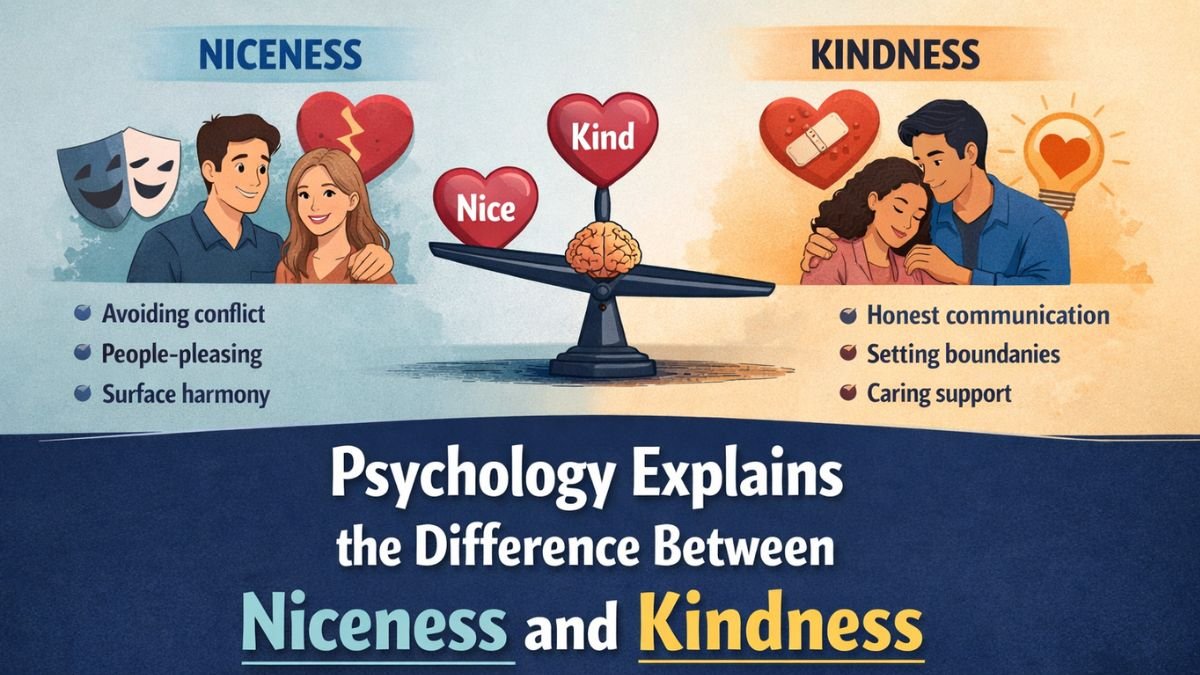
In our everyday interactions, we often strive to be a “good person.” Avoiding offense, agreeing to everything, and putting our own needs aside to keep others happy—we tend to equate all of this with being “nice.” However, Kindness Psychology suggests that being “nice” and being “kind” are not one and the same. There is a subtle yet profound distinction between the two—one that most people fail to grasp until a problem arises within a relationship.
What is the True Meaning of Being ‘Nice’ vs. ‘Kind’?
Being “nice” implies maintaining a relationship, even if it requires suppressing your true feelings. Such individuals often shy away from conflict and strive to keep every situation calm and placid. Conversely, being “kind” means standing up for a person’s well-being, even if doing so temporarily creates tension within the relationship.
Simply put, being “nice” preserves the relationship, whereas being “kind” preserves the individual. This distinction may sound trivial, but its impact is immense.
When Being ‘Nice’ Becomes Harmful
Initially, being “nice” appears to be a positive trait, as it minimizes arguments and fosters a peaceful atmosphere. However, over time, this habit gradually disconnects you from your authentic emotions. You begin to neglect your own needs in an effort to keep others happy.
In such scenarios, relationships may appear perfectly fine on the surface, yet deep down, a sense of resentment and dissatisfaction begins to fester. Eventually, this pent-up tension can erupt into a major conflict.
Why is Being ‘Kind’ More Important?
Being “kind” is not always easy, as it requires you to speak the truth—even if that truth is difficult to hear. Yet, it is precisely this honesty that is essential for a person’s growth and well-being.
For instance, if a loved one is making a poor decision, a “nice” person would remain silent to avoid jeopardizing the relationship. However, a “kind” person will attempt to guide them toward the right path, even if it creates an uncomfortable situation for a while.
When Do the Paths of “Nice” and “Kind” Diverge?
Most of the time, “nice” and “kind” travel in the same direction—both reflecting positive behavior. However, in certain specific circumstances, their paths diverge.
When you need to speak the truth, set boundaries, or make a difficult decision for someone’s own good, the distinction between being “nice” and being “kind” becomes clearly apparent. This is precisely the moment where people often get confused and choose the easier path—namely, remaining “nice.”
How to Strike the Right Balance for Healthy Relationships?
Maintaining a balance between being “nice” and being “kind” is crucial for keeping relationships strong and authentic. Being tough or blunt all the time is not appropriate, nor is trying to please everyone at every moment.
You must understand when to prioritize the relationship itself and when to prioritize the individual’s well-being. Open communication, honestly expressing your feelings, and respecting the emotions of others help in maintaining this balance.
Conclusion
Psychology teaches us that being “nice” and being “kind” are not the same thing. While being “nice” focuses on maintaining relationships, being “kind” prioritizes the individual’s true well-being. For a healthy and strong relationship, it is essential that we understand the distinction between the two and adopt the appropriate behavior at the right time. It is this very understanding that helps us become better human beings and build better relationships.
FAQs
Q1. Is being nice the same as being kind in a relationship?
A. No, being nice often means avoiding conflict and pleasing others, while being kind focuses on honesty and what’s truly best for the other person.
Q2. Can being too nice harm a relationship?
A. Yes, excessive niceness can lead to suppressed feelings, lack of boundaries, and unresolved issues over time.
Q3. Why is kindness more important than niceness?
A. Kindness builds trust and emotional safety because it prioritizes genuine care, even if it involves difficult conversations.
- communication in relationships
- difference between nice and kind
- emotional honesty
- emotional intelligence in relationships
- healthy relationships tips
- kindness in love
- mental health relationships
- niceness vs kindness
- people pleasing behavior
- psychology of love
- relationship advice
- relationship boundaries
- relationships psychology
- self awareness in love
Author

ranotiwari22@gmail.com
Related Posts

Hidden Pain of Venezuelan Migrants: The Psychological Crisis You Didn’t Know
- 0
- 997 words
Hidden Pain of Venezuelan Migrants: The continuous exodus of millions of people from Venezuela is not merely a story of physical displacement;...
Psychology tells us that adults who DON’T have close friends aren’t necessarily introverted or cold; many simply learned long ago that letting others get too close was the quickest way to get hurt
- 0
- 1,228 word
Psychology tells us that adults who DON’T have close friends aren’t necessarily introverted or cold: In today’s world, it is common for...
Psychology Explains Why 1960s and 1970s Kids Became Emotionally Strong Through Independence
- 0
- 1,266 word
The childhood experience of those who grew up in the 1960s and 1970s often looks dramatically different from what children experience today....

Psychology suggests that the kindest people don’t always end up surrounded by close friends; they have often learned to be helpful, understanding, and available in ways that make others feel cared for, but not necessarily understood by them
- 0
- 972 words
Kindness is often seen as a bridge that connects people, a quality that naturally attracts warmth, appreciation, and companionship. We tend to...
Exploring Behavioral Psychology: The Science Behind Human Actions
- 0
- 885 words
Behavioral Psychology is the science that seeks to understand the underlying causes behind human behavior. It is not limited merely to thoughts...

Powerful Behavioral Psychology Insights for Everyday Life
- 0
- 1,409 word
Human behavior often feels unpredictable, yet much of what we do follows patterns shaped by our thoughts, environment, and past experiences. Behavioral...
- applied behavioral psychology
- behavior change strategies
- behavior improvement tips
- behavioral psychology insights
- behavioral science concepts
- cognitive behavior patterns
- decision making psychology
- everyday psychology tips
- habit formation psychology
- human behavior psychology
- human thinking patterns
- mental behavior analysis
- psychological behavior insights
- psychology of actions
- psychology of habits