
- 0
- 1,076 word
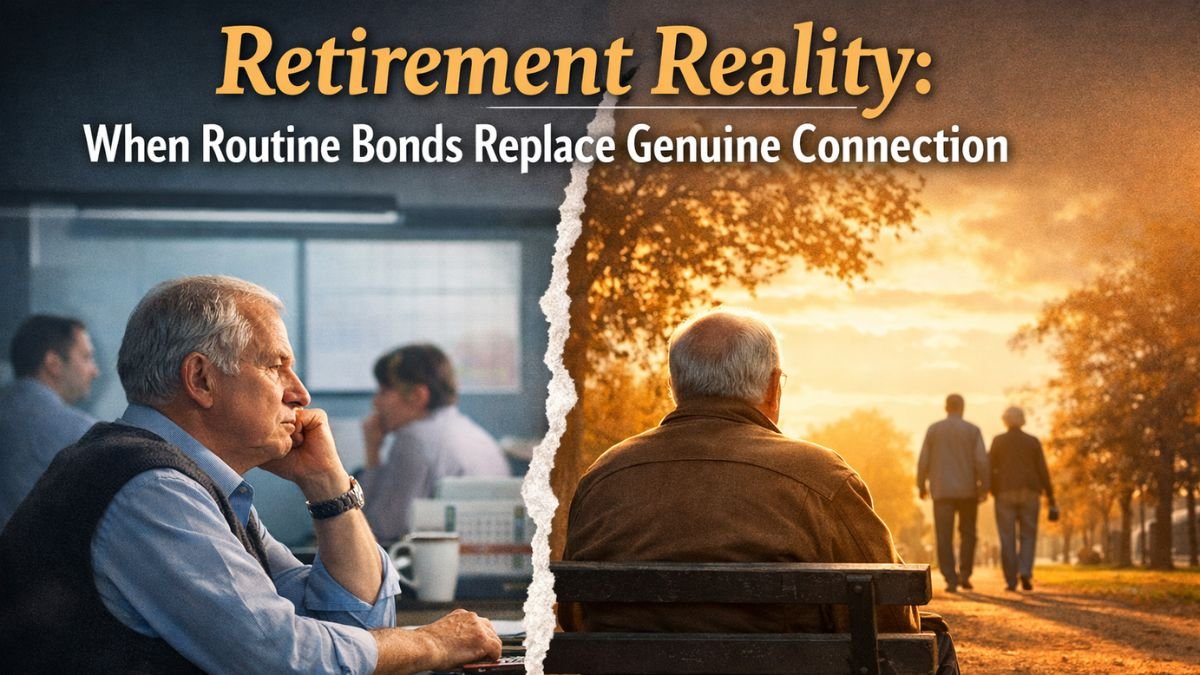
It is believed that retirement Reality marks the most serene period of one’s life—when one finally gets relief from all the burdens and starts living for himself/herself. But behind all such a bright facade there lurks a different story, a story which has never been spoken about. The story of loneliness—a state caused not only by isolation but also by detachment. After the bustle stops, people discover that all their relations never really mattered—they existed only due to the need for everyday interactions and necessities.
The Real Basis of Our Relations: Was It Ever Reliable?
During our working lives, our days unfold according to a fixed routine—going to the office, interacting with colleagues, chatting over tea, and attending meetings. Gradually, these interactions become an integral part of our social fabric, leading us to believe that we possess a robust social circle. However, following retirement—when all these activities abruptly come to a halt—the very people we used to encounter daily begin to drift away.
It is only then that a person starts wondering whether these connections really belonged to him or just developed out of chance, because he happened to meet others at the right place at the right time. Such discoveries can turn out to be very disappointing since they reveal the naked truth about life.

Habitual Relations vs. Those Stemming from Heartfelt Affection
There are two types of relationships: the type of relations born out of habit and necessity, and those based on true affection between people. In most cases, once retired, habitual relations cease to exist since their very essence is based on regular interaction and work-related needs. With their disappearance, the relationship itself will also start to fade away.
On the other hand, relationships based on deep connections continue to exist even beyond the limitations of time and context. However, the reality is that there are very few relationships like this. This is why it is common for people to feel empty once they retire – an emptiness that cannot be simply filled by people but by depth itself. Loneliness: Alone in the Crowd and With Yourself
It is not true that loneliness occurs because of a lack of people around you; it happens when nobody seems to understand you. Once you have retired, things become slower for you and thus give you the opportunity to contemplate your life. One begins to contemplate one’s relationships, one’s life, and one’s very identity.
During this phase, it often dawns upon us that the very people with whom we have been connected for years never truly made an effort to know us deeply. This realization can be deeply shattering, for it is not merely about others, but also—and perhaps more significantly—about our own expectations.
Identity Crisis and Emotional Shifts
Retirement entails the loss not just of a job, but of an identity as well. When someone used to ask you, “What do you do?”, you previously had a clear-cut answer. However, after retirement, this very question can often leave you feeling uncomfortable.
Compounding this, as old relationships begin to weaken, one feels even more isolated. This evolves into a form of identity crisis—a period in which the individual strives to rediscover themselves and forge a new sense of identity.

Is It Possible to Overcome This Situation?
Yes, absolutely. Retirement can be viewed not as an end, but as a new beginning. It is a time when you can cultivate the relationships that truly matter. To do so, it is essential that you open yourself up to new experiences—visit new places, meet new people, and engage in activities that bring you joy.
Most importantly, you must reconnect with yourself. Once you begin to understand yourself, you become capable of building deeper, more authentic relationships with others as well.
A Step Towards Deeper Connections
Retirement teaches us that, in life, quality matters far more than quantity—whether it pertains to time or relationships. A few genuine and deep connections are infinitely more valuable than hundreds of superficial ones. Therefore, it is essential that we do not treat our relationships merely as a means to pass the time, but rather nurture them with understanding, respect, and genuine interest.
Conclusion
The most difficult part of retirement is not loneliness, but rather the realization that many of our relationships were based solely on routine and convenience. However, this realization can also serve as an opportunity—an opportunity to view our lives from a new perspective, to redefine our relationships, and to forge a deeper connection with ourselves.
Once we accept this truth, we can move forward toward living a more balanced, authentic, and fulfilling life.
FAQS
Q1. What happens to relationships after retirement?
A. Many relationships weaken because they were based on routine, not deep emotional connection.
Q2. Why does retirement feel emotionally isolating?
A. Because daily interactions reduce, revealing which bonds were truly meaningful.
Q3. Are all relationships affected after retirement?
A. No, only those built on convenience tend to fade.
Q4. How can retirees maintain strong relationships?
A. By nurturing meaningful conversations and staying socially engaged.
Q5. What is the key lesson from retirement psychology?
A. True relationships are built on genuine interest, not just proximity or routine.
Author

priyachauhan007891@gmail.com
Related Posts

Hidden Pain of Venezuelan Migrants: The Psychological Crisis You Didn’t Know
- 0
- 997 words
Hidden Pain of Venezuelan Migrants: The continuous exodus of millions of people from Venezuela is not merely a story of physical displacement;...
Psychology tells us that adults who DON’T have close friends aren’t necessarily introverted or cold; many simply learned long ago that letting others get too close was the quickest way to get hurt
- 0
- 1,228 word
Psychology tells us that adults who DON’T have close friends aren’t necessarily introverted or cold: In today’s world, it is common for...
Psychology Explains Why 1960s and 1970s Kids Became Emotionally Strong Through Independence
- 0
- 1,266 word
The childhood experience of those who grew up in the 1960s and 1970s often looks dramatically different from what children experience today....

Psychology suggests that the kindest people don’t always end up surrounded by close friends; they have often learned to be helpful, understanding, and available in ways that make others feel cared for, but not necessarily understood by them
- 0
- 972 words
Kindness is often seen as a bridge that connects people, a quality that naturally attracts warmth, appreciation, and companionship. We tend to...
Exploring Behavioral Psychology: The Science Behind Human Actions
- 0
- 885 words
Behavioral Psychology is the science that seeks to understand the underlying causes behind human behavior. It is not limited merely to thoughts...

Powerful Behavioral Psychology Insights for Everyday Life
- 0
- 1,409 word
Human behavior often feels unpredictable, yet much of what we do follows patterns shaped by our thoughts, environment, and past experiences. Behavioral...
- applied behavioral psychology
- behavior change strategies
- behavior improvement tips
- behavioral psychology insights
- behavioral science concepts
- cognitive behavior patterns
- decision making psychology
- everyday psychology tips
- habit formation psychology
- human behavior psychology
- human thinking patterns
- mental behavior analysis
- psychological behavior insights
- psychology of actions
- psychology of habits