
- 0
- 825 words
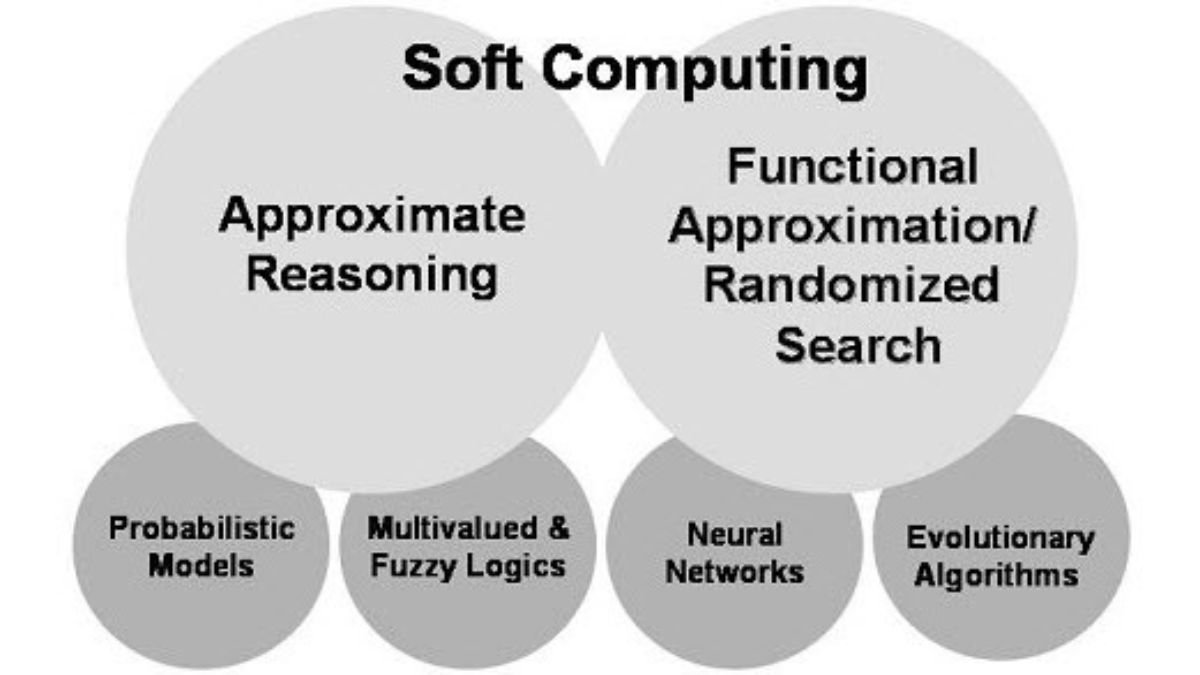
Soft computing is a modern approach to problem-solving that embraces uncertainty, imprecision, and partial truth—unlike traditional “hard” computing, which demands exact inputs and outputs. In real-world scenarios, data is often incomplete or ambiguous, and this is where soft computing techniques shine. By mimicking human reasoning and natural processes, these methods provide flexible, adaptive, and efficient solutions to complex problems. Among the most important soft computing techniques are Neural Networks, Fuzzy Logic, and Evolutionary Algorithms, each offering unique strengths and applications.
Understanding Neural Networks
Neural Networks are inspired by the structure and functioning of the human brain. They consist of layers of interconnected nodes, or “neurons,” that process information and learn patterns from data. These systems are particularly powerful in tasks such as image recognition, speech processing, and predictive analytics.
What makes neural networks remarkable is their ability to learn from experience. Instead of being explicitly programmed, they are trained using large datasets. As they process more information, they adjust their internal parameters to improve accuracy. This learning capability allows them to handle complex relationships that are difficult to model using traditional methods.
However, neural networks also come with challenges. They often require large amounts of data and computational power, and their decision-making process can sometimes be difficult to interpret. Despite this, their ability to adapt and evolve makes them a cornerstone of modern artificial intelligence.
The Role of Fuzzy Logic
Fuzzy Logic introduces a different way of thinking about truth and decision-making. Unlike classical logic, which deals in binary values such as true or false, fuzzy logic allows for degrees of truth. This approach is closer to human reasoning, where decisions are often based on vague or uncertain information.
For example, instead of defining temperature as simply “hot” or “cold,” fuzzy logic can describe it as “somewhat warm” or “very hot.” This flexibility makes it ideal for systems that need to operate in uncertain environments, such as climate control systems, washing machines, and even traffic management.
Fuzzy logic systems rely on a set of rules and membership functions to process input data and produce outputs. These systems are easy to understand and implement, making them highly practical for many applications. Their strength lies in their simplicity and ability to model real-world ambiguity effectively.
Evolutionary Algorithms and Natural Selection
Evolutionary Algorithms are inspired by the process of natural selection and biological evolution. These algorithms work by generating a population of potential solutions and then iteratively improving them through processes such as selection, mutation, and crossover.
The idea is simple yet powerful: the best solutions are selected and combined to produce new generations, gradually leading to optimal or near-optimal results. This approach is particularly useful for optimization problems where traditional methods struggle to find efficient solutions.
Evolutionary algorithms are widely used in fields such as engineering design, scheduling, and machine learning. They are especially effective when dealing with large, complex search spaces. Although they can be computationally intensive, their ability to explore multiple solutions simultaneously gives them a significant advantage.
Combining Techniques for Better Results
One of the most exciting aspects of soft computing is the possibility of combining different techniques to create hybrid systems. For example, neural networks can be integrated with fuzzy logic to form neuro-fuzzy systems, which combine learning capabilities with human-like reasoning. Similarly, evolutionary algorithms can be used to optimize neural network parameters or fine-tune fuzzy systems.
These hybrid approaches often outperform individual techniques by leveraging their complementary strengths. They provide more robust, accurate, and adaptable solutions, making them highly valuable in advanced applications such as robotics, healthcare, and financial modeling.
Applications in the Real World
Soft computing techniques are widely used across various industries. In healthcare, they assist in diagnosing diseases and predicting patient outcomes. In finance, they help in risk assessment and fraud detection. In transportation, they optimize routes and manage traffic flow.
The adaptability of these methods makes them suitable for dynamic environments where conditions change rapidly. Their ability to handle uncertainty and learn from data ensures that they remain relevant in an increasingly complex world.
Conclusion
Soft computing represents a shift toward more flexible and intelligent problem-solving methods. By incorporating techniques such as Neural Networks, Fuzzy Logic, and Evolutionary Algorithms, it allows systems to handle uncertainty, learn from experience, and adapt to changing conditions. Each technique brings its own strengths, and when combined, they offer even greater potential.
As technology continues to evolve, the importance of soft computing will only grow. Its ability to mimic human thinking and natural processes makes it an essential tool for tackling the complex challenges of the modern world.
Author

fouzik457@gmail.com
Related Posts

Computer Vision and Image Processing: Applications in Healthcare & Industry
- 0
- 767 words
In today’s digital world, Computer Vision and Image Processing have emerged as technologies evolving at a pace far exceeding our imagination. These...
Read out all
How Machine Learning is Changing Real-World Solutions in 2025
- 0
- 1,233 word
Machine learning (ML), a powerful branch of artificial intelligence, is no longer confined to research labs or tech giants. In 2025, it...
Read out all
Cybersecurity in the Age of AI: Protecting Data in 2025 and Beyond
- 0
- 648 words
With the advent of technology, everything is performed on the internet, making the need for cybersecurity more crucial than ever. Moreover, with...
Read out all
Distributed and Parallel Computing: Why It Matters for AI and Big Data
- 0
- 837 words
In today’s digital world, the rapid growth of Artificial Intelligence (AI) and Big Data has transformed how we live, work, and make...
Read out all
Blockchain Technology in Computer Science: Beyond Cryptocurrency
- 0
- 742 words
While the use of blockchain technology is predominantly associated with digital currencies, in reality, the technology has much wider implications than just...
Read out all
10 Key Artificial Intelligence Trends Shaping 2025 with Research Data
- 0
- 1,097 word
Artificial Intelligence (AI) is no longer just a futuristic concept—it has become a powerful force shaping how we live, work, and interact...
Read out all