

- 0
- 648 words
With the advent of technology, everything is performed on the internet, making the need for cybersecurity more crucial than ever. Moreover, with the development of Artificial Intelligence (AI), which has led to many advancements but at the same time has made cyber threats more difficult and sophisticated to handle. When looking towards the future, from 2025 onwards, data security will become a key issue, and ignoring it will be highly risky for everyone.
The Evolving Relationship Between AI and Cybersecurity
Artificial Intelligence has completely transformed the landscape of cybersecurity. Whereas cyberattacks were once executed using relatively simple techniques, hackers are now leveraging AI to launch more sophisticated and automated attacks. These attacks are so advanced that detecting and neutralizing them has become an extremely difficult task. Conversely, AI is also being harnessed to enhance security measures. By deploying AI-driven systems, companies can rapidly identify suspicious activities and neutralize threats in real-time. Thus, AI acts as a double-edged sword—it simultaneously provides security and amplifies threats.
Why Data Security Has Become the Top Priority
In the contemporary world, data has emerged as the most valuable asset. Whether it involves personal information, banking credentials, or confidential corporate documents—every category of data holds immense value for cybercriminals.
However, if the information is obtained by the wrong people, the repercussions will not only be monetary but may also have significant ramifications on one’s identity and reputation. That is the reason why securing data is of utmost importance in 2025.
Increasing Cyber Threats in the Age of AI
With the use of AI becoming more widespread, cyber threats themselves are evolving. Hackers are now utilizing machine learning algorithms to execute more potent and effective phishing attacks. Furthermore, deepfake technology is being employed to fabricate counterfeit videos and audio recordings, making it easier than ever to deceive individuals. Furthermore, ransomware attacks have become more dangerous than ever before, with hackers locking data and demanding a ransom. Traditional security measures are no longer sufficient to defend against these attacks.
Cybersecurity Strategies Companies Should Adopt
In today’s world of artificial intelligence, companies have to develop effective cybersecurity strategies. Firstly, updating systems to address all possible security flaws becomes extremely important.
Secondly, it is necessary to utilize multi-factor authentication (MFA), data encryption, and cybersecurity education for employees. The use of AI-driven cybersecurity solutions will help businesses detect threats beforehand.
How To Maintain Your Personal Cybersecurity?
Cybersecurity cannot be left at the doorstep of businesses alone, but individuals also have to take necessary measures to secure their data. With small actions such as creating complex passwords, being careful about clicking on links, and maintaining the up-to-date status of gadgets, one can protect themselves from massive cyber attacks. It is equally necessary to avoid sharing your personal information on social media platforms because that same data can be used against you by cyber attackers.
Challenges and Opportunities for the Future
The future holds much complexity for cybersecurity. As artificial intelligence advances, new forms of attacks will arise, presenting great challenges to overcome. But at the same time, such threats can be managed by creating new innovations and better security systems. It is necessary for governments and businesses to work together to come up with policies and regulations that help avoid cybercrimes.
Conclusion
With artificial intelligence in mind, cybersecurity has evolved into something that is not optional but essential. In the years to come – starting from 2025 – protecting personal data is going to be everyone’s priority. Through proper actions, we can protect ourselves and create a secure future.
Author

priyachauhan007891@gmail.com
Related Posts

Computer Vision and Image Processing: Applications in Healthcare & Industry
- 0
- 767 words
In today’s digital world, Computer Vision and Image Processing have emerged as technologies evolving at a pace far exceeding our imagination. These...
Read out all
How Machine Learning is Changing Real-World Solutions in 2025
- 0
- 1,233 word
Machine learning (ML), a powerful branch of artificial intelligence, is no longer confined to research labs or tech giants. In 2025, it...
Read out all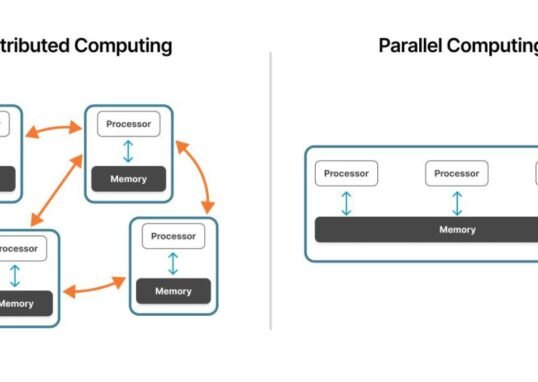
Distributed and Parallel Computing: Why It Matters for AI and Big Data
- 0
- 837 words
In today’s digital world, the rapid growth of Artificial Intelligence (AI) and Big Data has transformed how we live, work, and make...
Read out all
Blockchain Technology in Computer Science: Beyond Cryptocurrency
- 0
- 742 words
While the use of blockchain technology is predominantly associated with digital currencies, in reality, the technology has much wider implications than just...
Read out all
10 Key Artificial Intelligence Trends Shaping 2025 with Research Data
- 0
- 1,097 word
Artificial Intelligence (AI) is no longer just a futuristic concept—it has become a powerful force shaping how we live, work, and interact...
Read out all
Internet of Things (IoT) and AI Integration: Smart Future Explained
- 0
- 646 words
Today’s world is rapidly advancing toward digital transformation, where everything is becoming interconnected via the internet. The Internet of Things (IoT) and...
Read out all