
- 0
- 844 words
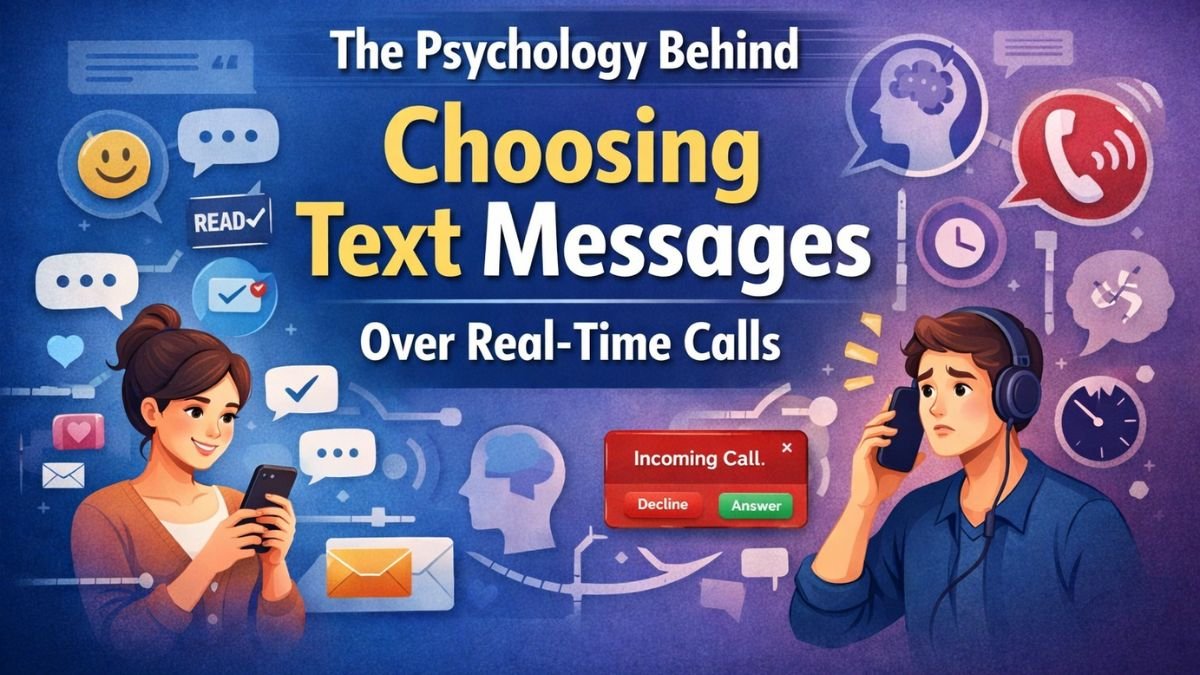
In today’s digital age, modes of communication are evolving rapidly. While phone calls were once the most common way to connect with others, many people now prefer text messaging. This preference is often mistakenly perceived as “antisocial” behavior; however, the reality is quite different. According to psychology, choosing to text is often linked to an individual’s cognitive style, their need for mental peace, and the quality of their self-expression.
The Pressure of Real-Time Interaction
In a phone call, conversation happens instantaneously—you are required to respond immediately, without the opportunity for much reflection. This situation can create significant mental pressure for many people. For those who wish to articulate their thoughts precisely, this experience often feels akin to a “real-time performance.”
Texting alleviates this pressure. It grants the individual the time to think, carefully select their words, and present their message more effectively. This is why many people view text messaging as a more comfortable and controllable medium.

Preserving the Quality of Thought
Psychology suggests that every individual possesses a unique cognitive style.While some people enjoy giving quick answers, others take their time thinking before responding. The second category of individuals finds texting helpful since it provides a way of sorting out one’s thoughts without being pressed.
When talking on the phone, we tend to say anything that comes into our heads at the moment, even when it is incomplete and irrational. Texting, on the other hand, offers an opportunity to think about what one wants to say and improve the message in the process.
Balancing Our Emotions
Texting also helps us maintain emotional balance during conversations. When talking over the phone, aspects like the intonation of the voice, the urgency of the response, and how the other person replies might affect our emotional balance. At times, a simple comment may cause misunderstandings between individuals.
Conversely, texting provides individuals with the time to process their emotions and articulate them in an appropriate manner. As a result, the communication becomes more balanced and lucid. Not Antisocial, but a Distinct Communication Style
Those who prioritize texting are often labeled as antisocial, but this perception is not entirely accurate. Every individual possesses a unique communication style. Some people feel most comfortable with face-to-face interactions or phone calls, while others are better able to articulate their thoughts through writing.
Choosing to text can be an indication that an individual values the quality of their thoughts and conversation, rather than a desire to distance themselves from others.

Priorities Changing with the Digital Age
In the current times, people are always pressed for time. There is a need to use means that offer more flexibility, and one such means is the ability to text. One is able to respond when it suits him or her without being disturbed.
Another advantage that comes with texting is that there is documentation of the entire communication process.This is another reason why people prioritize it.
Conclusion
From a psychological perspective, prioritizing text messages over phone calls does not constitute antisocial behavior; rather, it reflects a distinct and more controlled approach to thinking and communicating. It enables us to express ourselves more effectively, maintain emotional equilibrium, and preserve our peace of mind.
Therefore, the next time someone chooses to text instead of calling, it should be interpreted not as an act of distancing, but rather as a reflection of their depth of thought and their personal communication style.
FAQS
Q1. Why do some people prefer texting over phone calls?
A. Because it allows time to think and respond without pressure.
Q2. Is preferring texting a sign of being antisocial?
A. No, it often reflects a different communication style, not social avoidance.
Q3. What does psychology say about texting habits?
A. It suggests people use texting to protect clarity and quality of thinking.
Q4. Do introverts prefer texting more?
A. Often yes, as it gives them space to express thoughts comfortably.
Q5. Is texting better than calling?
A. It depends on the situation—both have their own benefits.
- communication styles
- digital communication
- emotional intelligence
- human behavior
- human psychology insights
- introvert communication
- mental clarity
- modern communication trends
- phone call anxiety
- psychology facts
- psychology of communication
- social behavior psychology
- texting habits
- texting preference
- texting vs calling
Author

priyachauhan007891@gmail.com
Related Posts

Hidden Pain of Venezuelan Migrants: The Psychological Crisis You Didn’t Know
- 0
- 997 words
Hidden Pain of Venezuelan Migrants: The continuous exodus of millions of people from Venezuela is not merely a story of physical displacement;...
Psychology tells us that adults who DON’T have close friends aren’t necessarily introverted or cold; many simply learned long ago that letting others get too close was the quickest way to get hurt
- 0
- 1,228 word
Psychology tells us that adults who DON’T have close friends aren’t necessarily introverted or cold: In today’s world, it is common for...

Psychology Explains Why 1960s and 1970s Kids Became Emotionally Strong Through Independence
- 0
- 1,266 word
The childhood experience of those who grew up in the 1960s and 1970s often looks dramatically different from what children experience today....

Psychology suggests that the kindest people don’t always end up surrounded by close friends; they have often learned to be helpful, understanding, and available in ways that make others feel cared for, but not necessarily understood by them
- 0
- 972 words
Kindness is often seen as a bridge that connects people, a quality that naturally attracts warmth, appreciation, and companionship. We tend to...
Exploring Behavioral Psychology: The Science Behind Human Actions
- 0
- 885 words
Behavioral Psychology is the science that seeks to understand the underlying causes behind human behavior. It is not limited merely to thoughts...

Powerful Behavioral Psychology Insights for Everyday Life
- 0
- 1,409 word
Human behavior often feels unpredictable, yet much of what we do follows patterns shaped by our thoughts, environment, and past experiences. Behavioral...
- applied behavioral psychology
- behavior change strategies
- behavior improvement tips
- behavioral psychology insights
- behavioral science concepts
- cognitive behavior patterns
- decision making psychology
- everyday psychology tips
- habit formation psychology
- human behavior psychology
- human thinking patterns
- mental behavior analysis
- psychological behavior insights
- psychology of actions
- psychology of habits